
Herniated Disc: Causes, Symptoms, and Non-Surgical Treatment Options
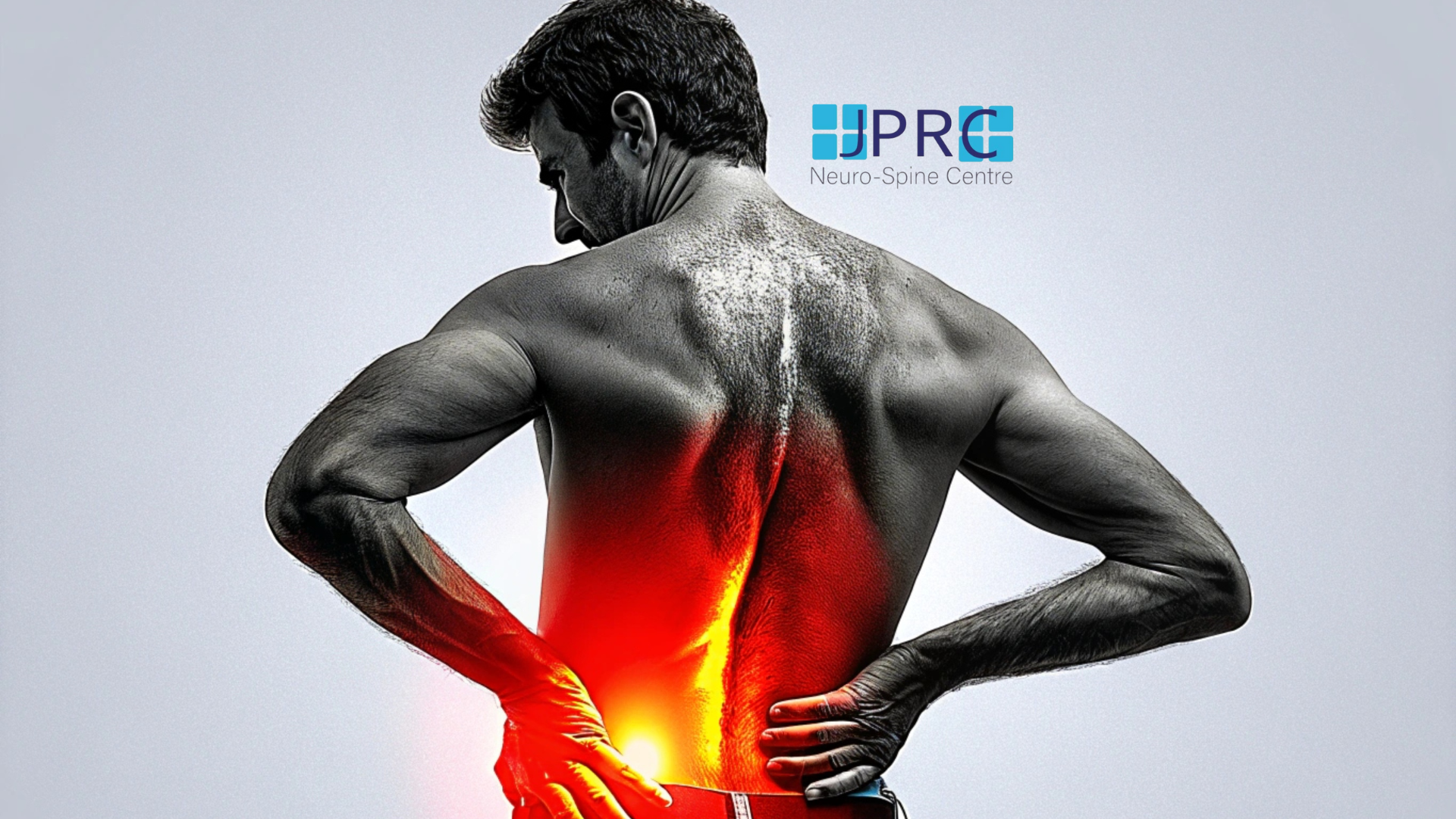
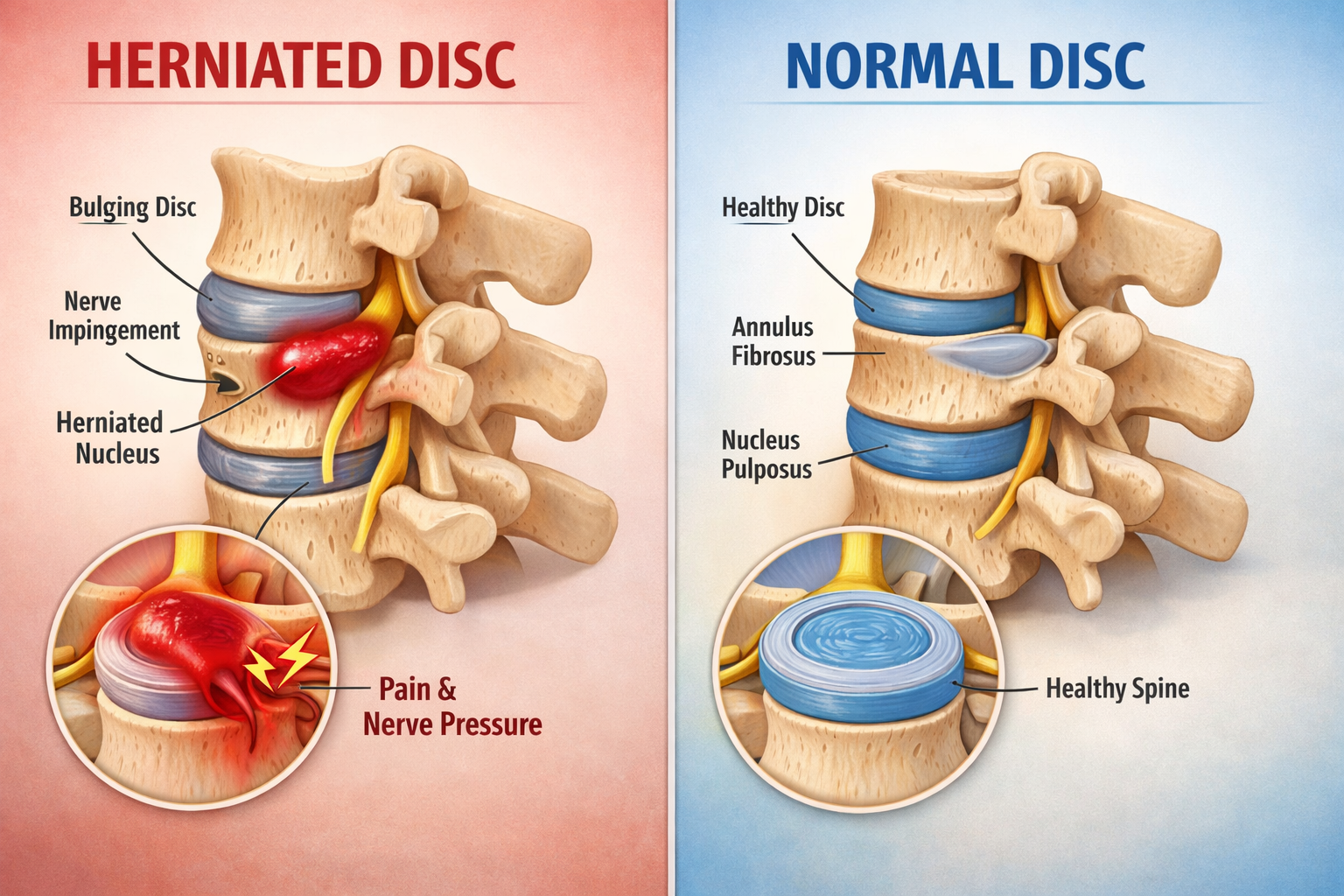
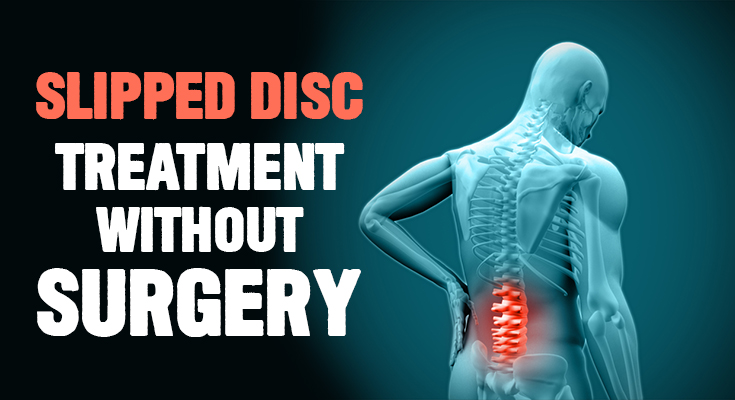
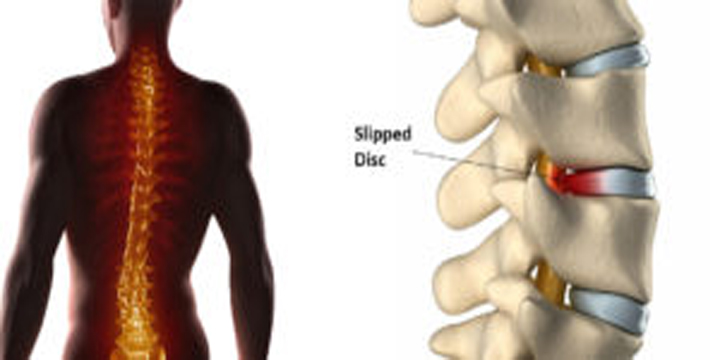
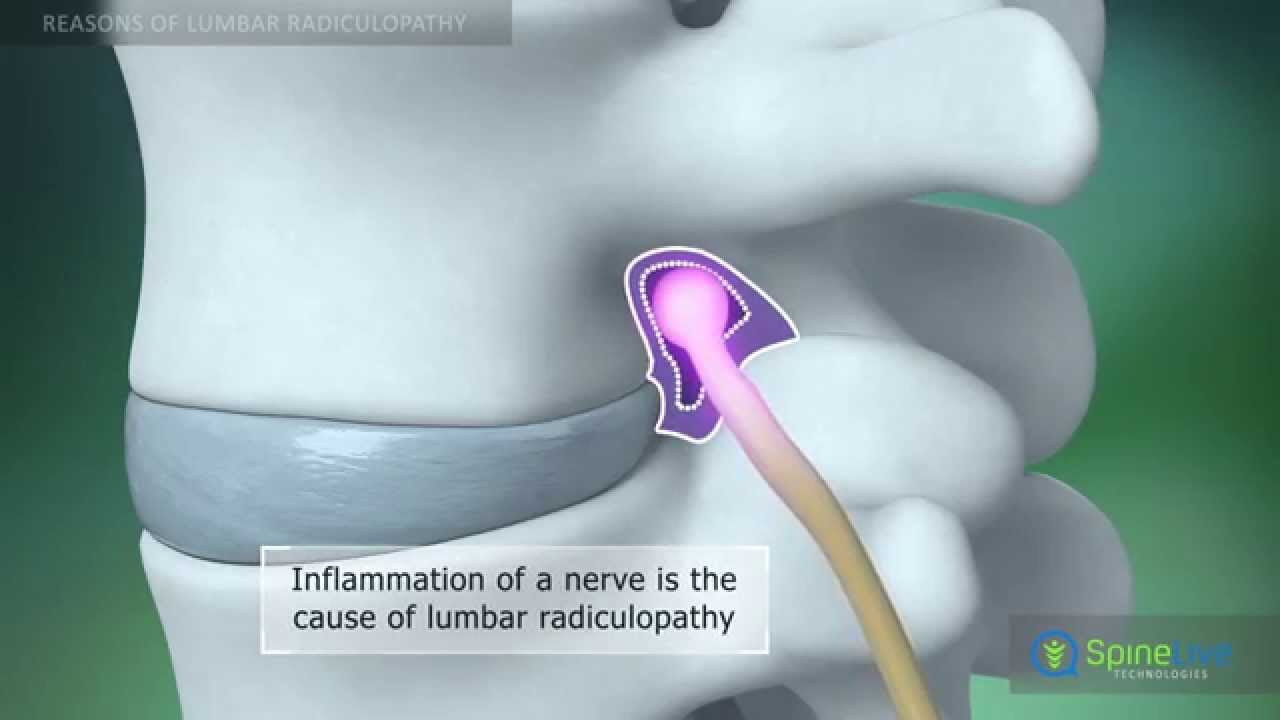
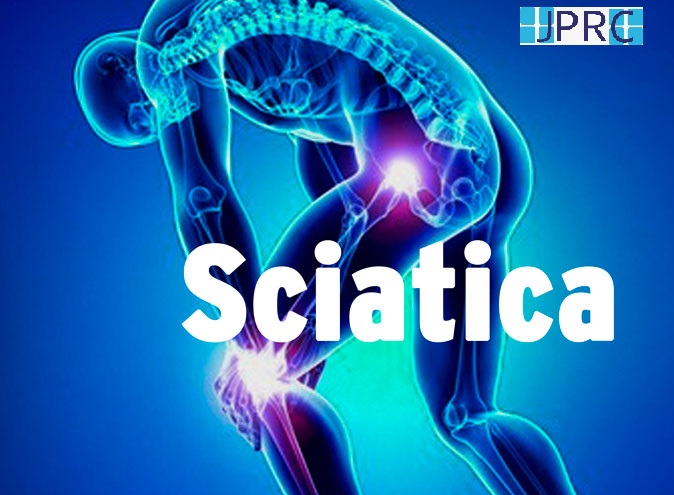
A herniated disc—often called a slip disc—occurs when the soft, gel-like center of a spinal disc pushes through a tear in its outer layer. This can irritate or compress nearby nerves, leading to back pain, leg pain (sciatica), numbness, tingling, or weakness. While the condition can be uncomfortable, many patients recover without surgery using modern, targeted treatments.
What Is a Herniated Disc?
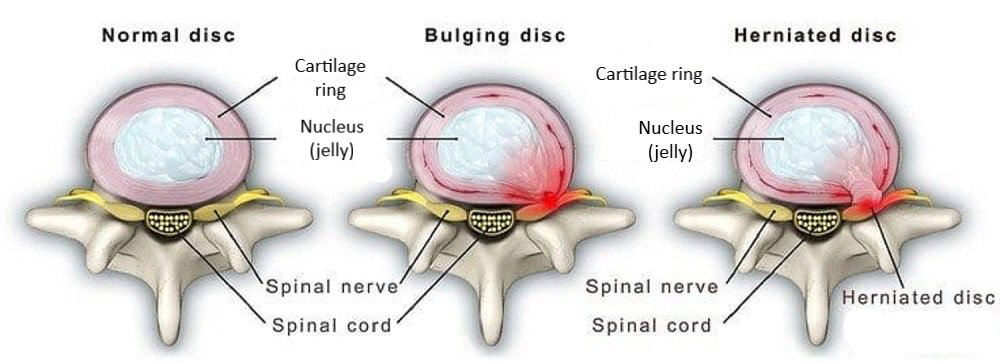
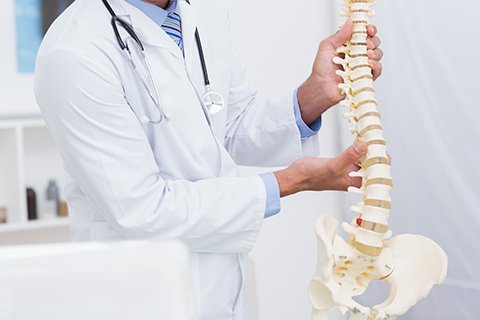
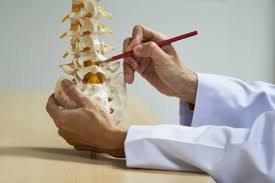
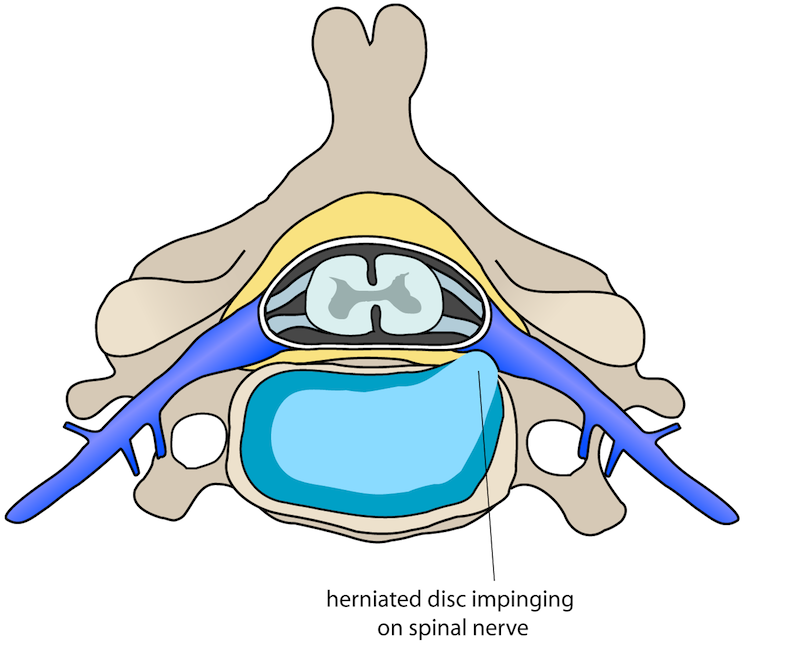
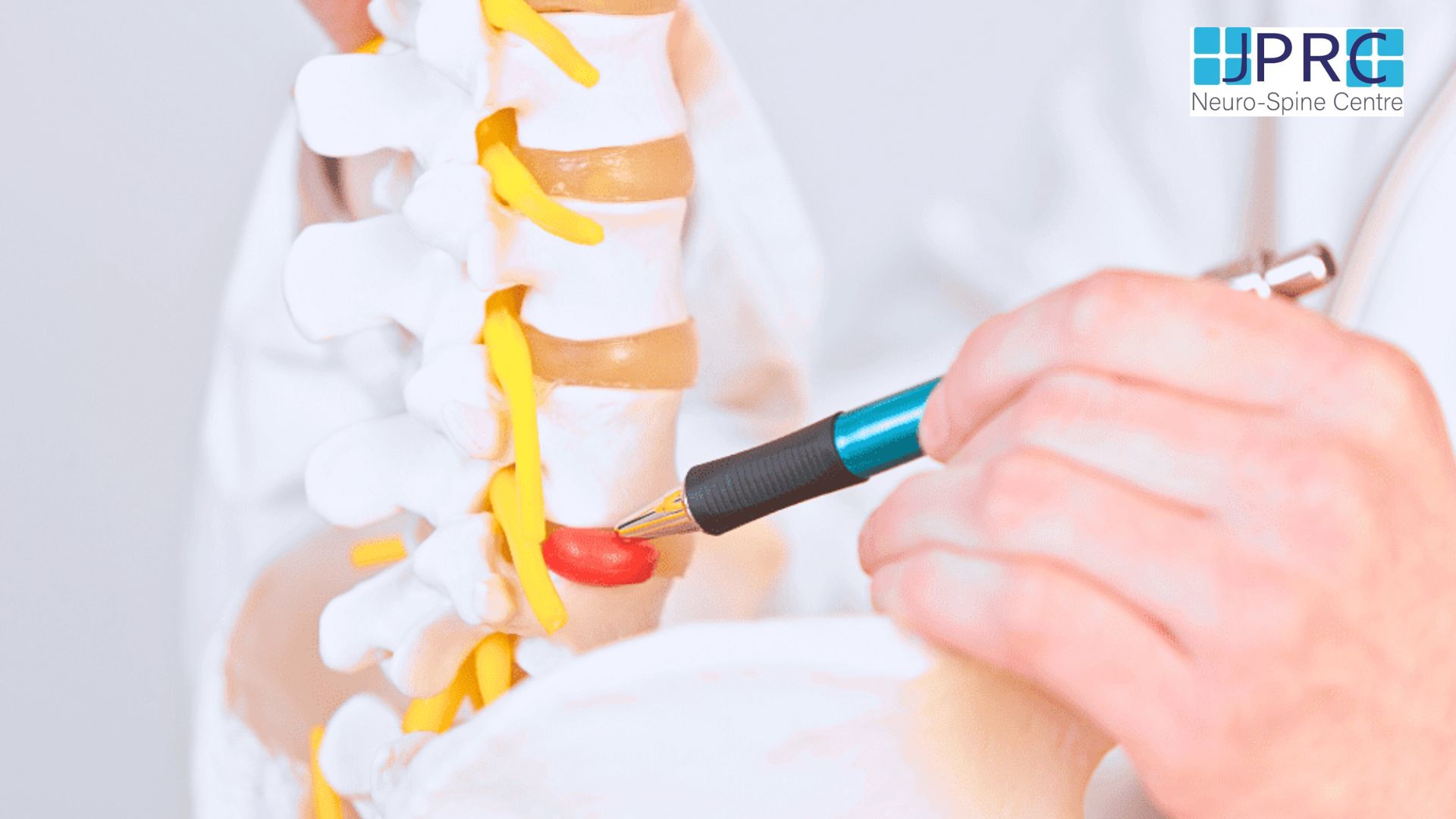
The spine is made up of bones (vertebrae) separated by discs that act as shock absorbers. Each disc has a tough outer ring (annulus fibrosus) and a soft inner core (nucleus pulposus).
A herniation happens when the inner core bulges or leaks out, potentially pressing on a spinal nerve.
Common Causes
-
Age-related wear and tear (disc degeneration)
-
Improper lifting or sudden twisting movements
-
Poor posture and prolonged sitting
-
Repetitive strain or heavy physical work
-
Obesity and weak core muscles
-
Traumatic injury
Symptoms to Watch For
Symptoms vary based on the disc’s location and nerve involvement:
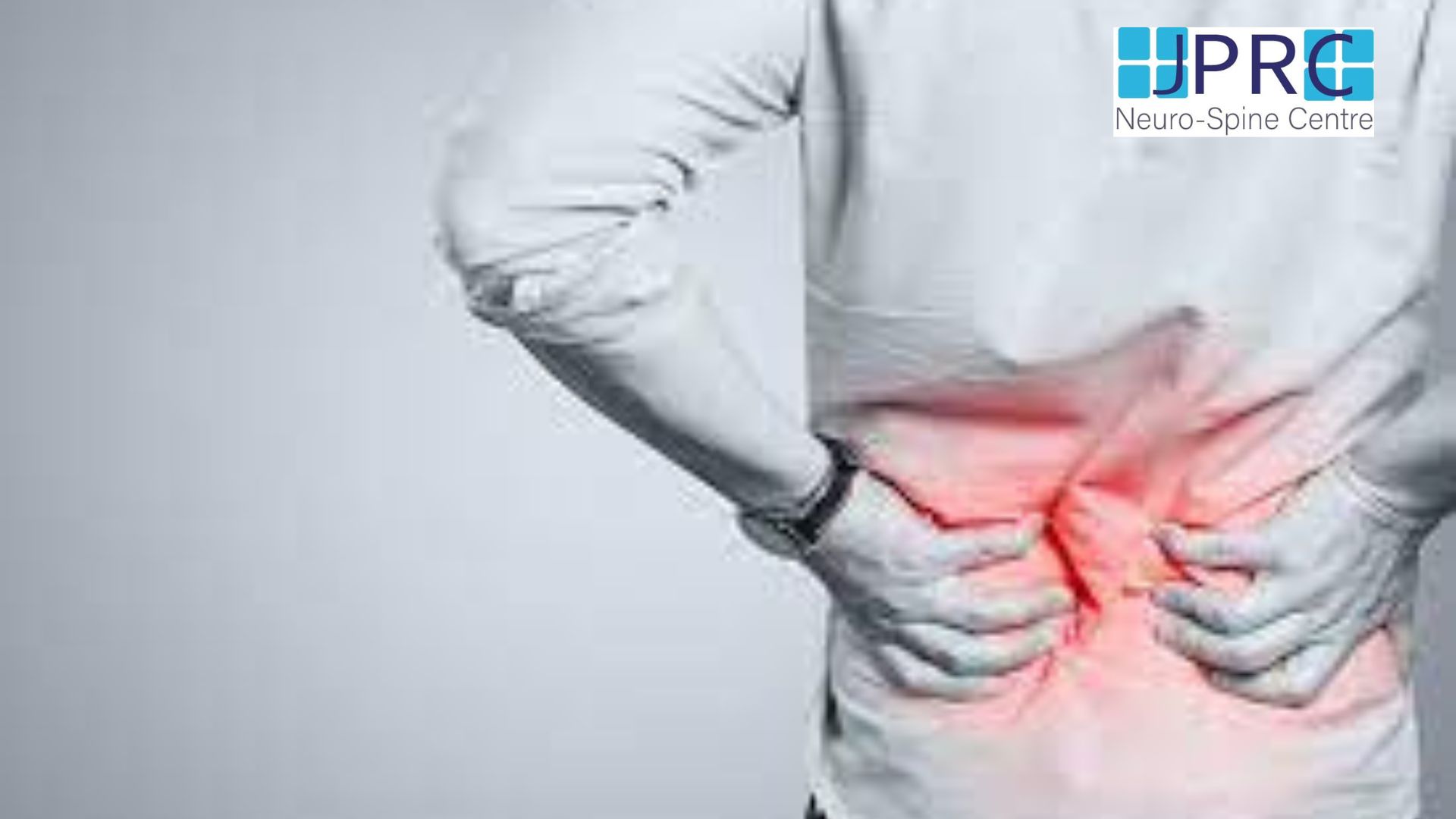
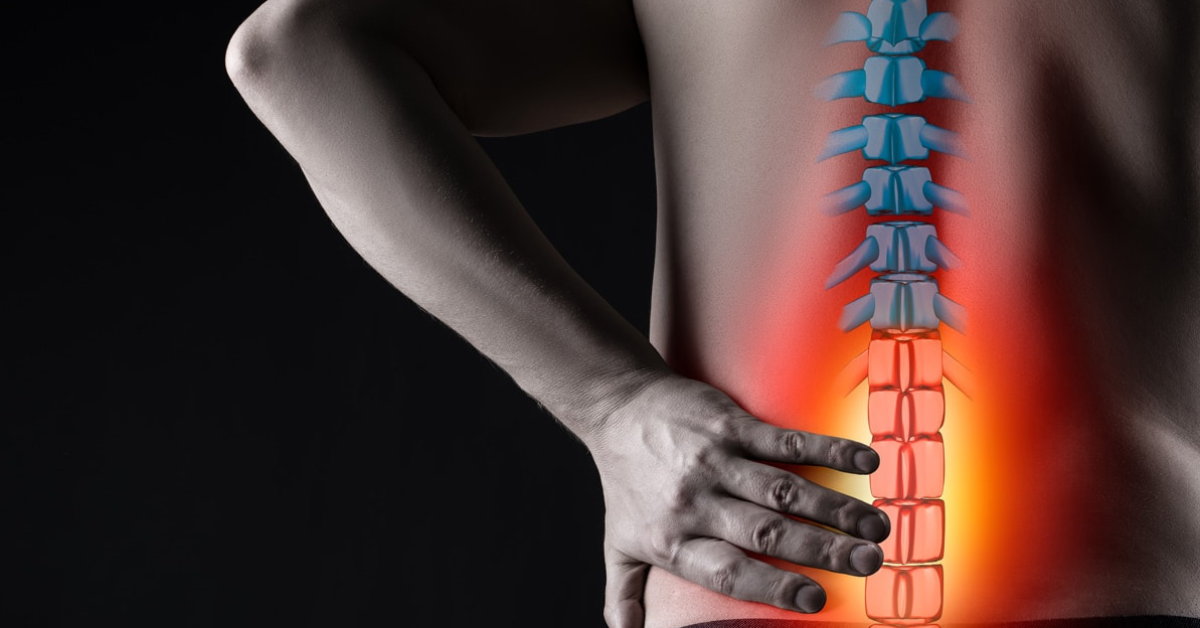
Lumbar (Lower Back)
-
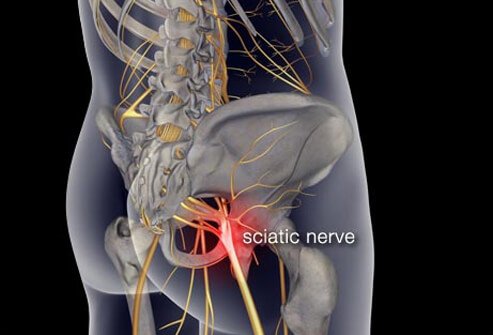
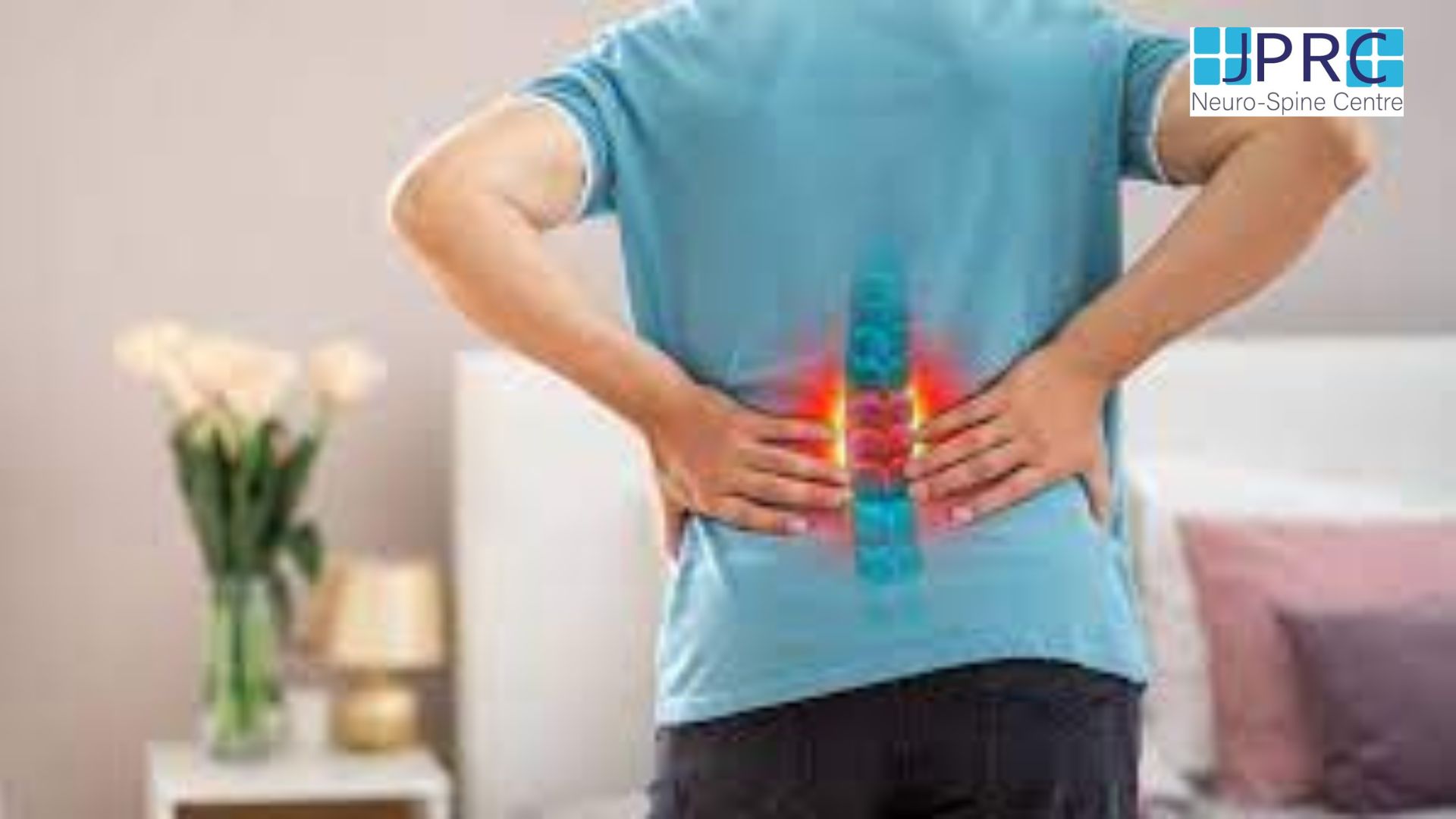
Sharp or burning pain down one leg (sciatica)
-
Numbness or tingling in the foot or calf
-
Muscle weakness
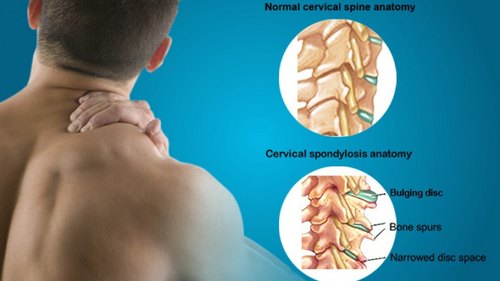
Cervical (Neck)
-
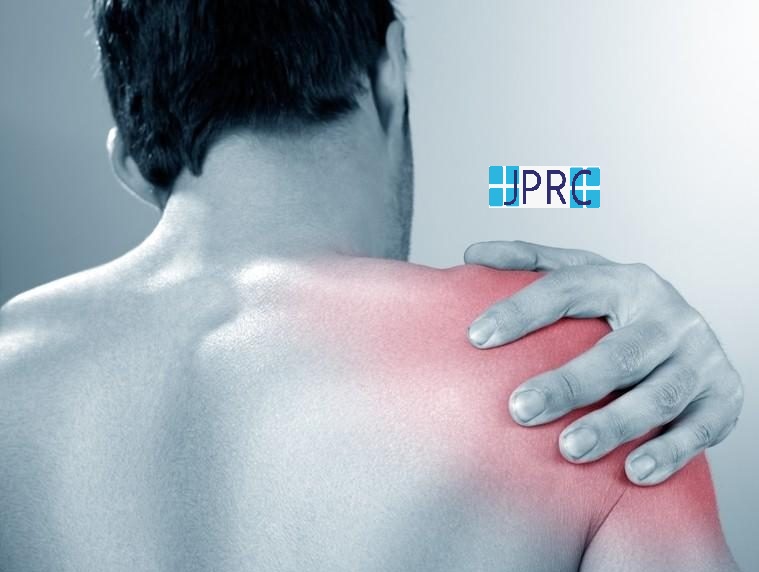
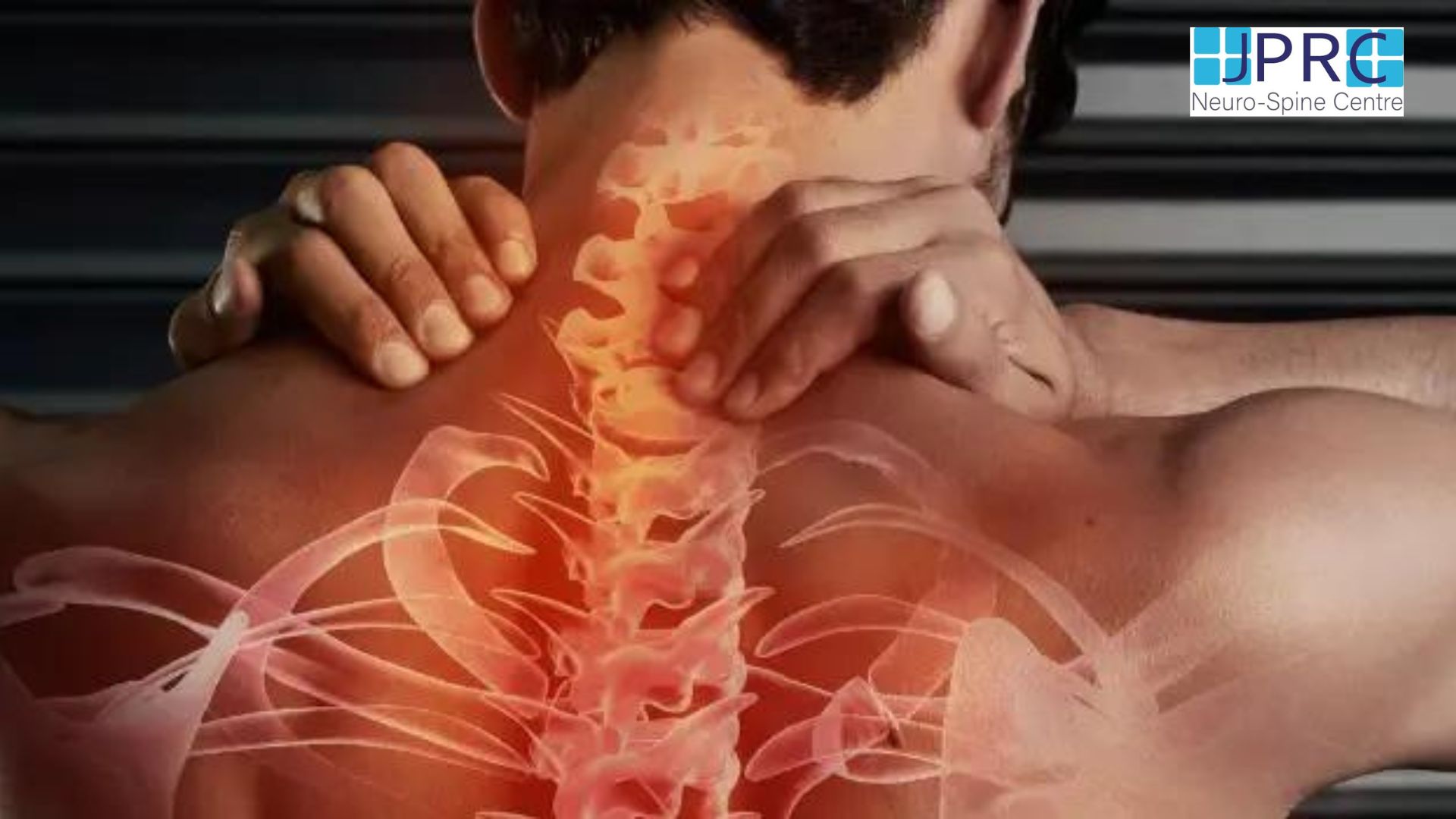
Pain radiating to the shoulder or arm
-
Tingling in the hand or fingers
-
Reduced grip strength
Diagnosis
A proper diagnosis includes:
-
Physical and neurological examination
-
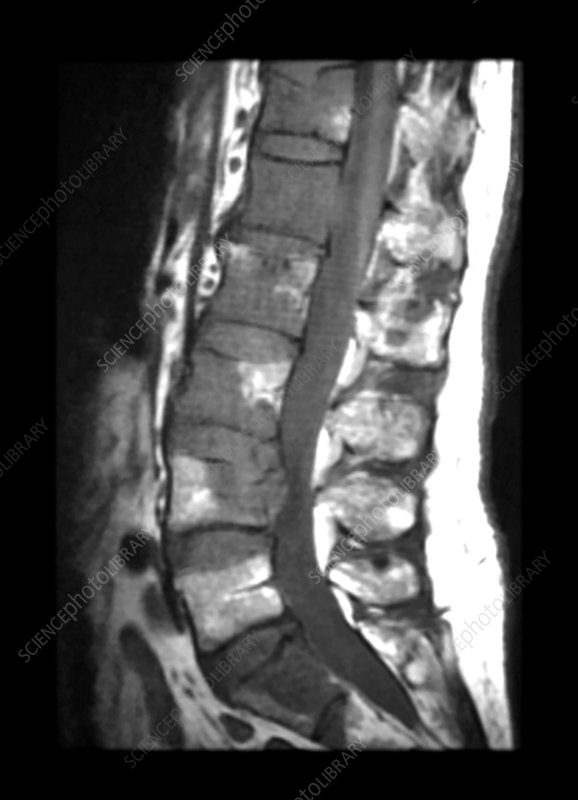
MRI (most accurate for disc and nerve visualization)
-
X-rays (to rule out bone-related issues)
Non-Surgical Treatment Options
Most herniated discs improve with conservative and interventional care, including:
1. Medications
-
Anti-inflammatory drugs
-
Muscle relaxants
-
Short-term pain relievers
2. Physiotherapy
-
Core strengthening
-
Posture correction
-
Guided stretching and mobility exercises
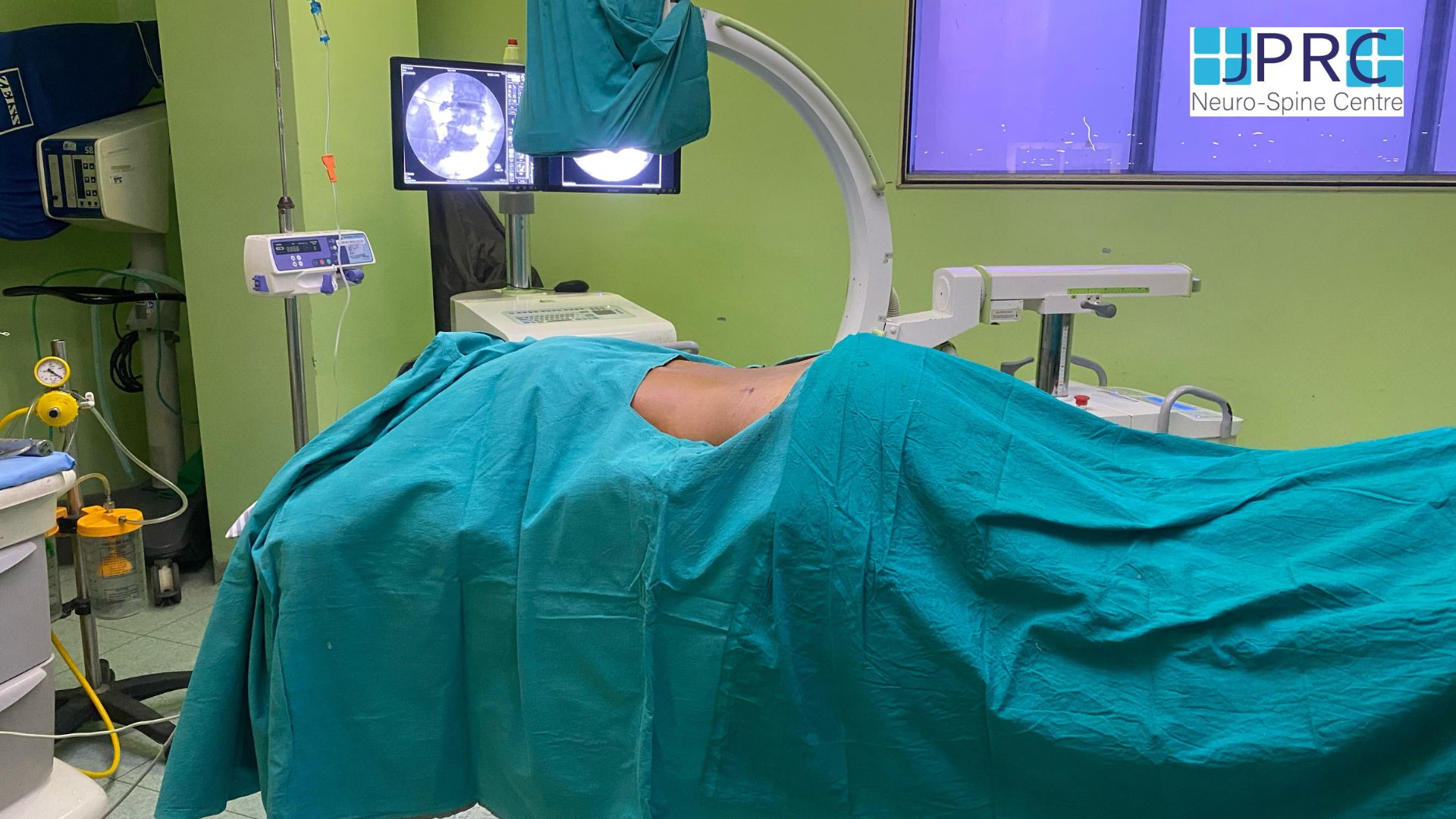
3. Interventional Pain Procedures
-
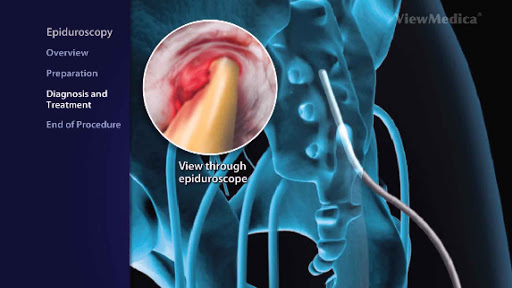
Epidural steroid injections
-
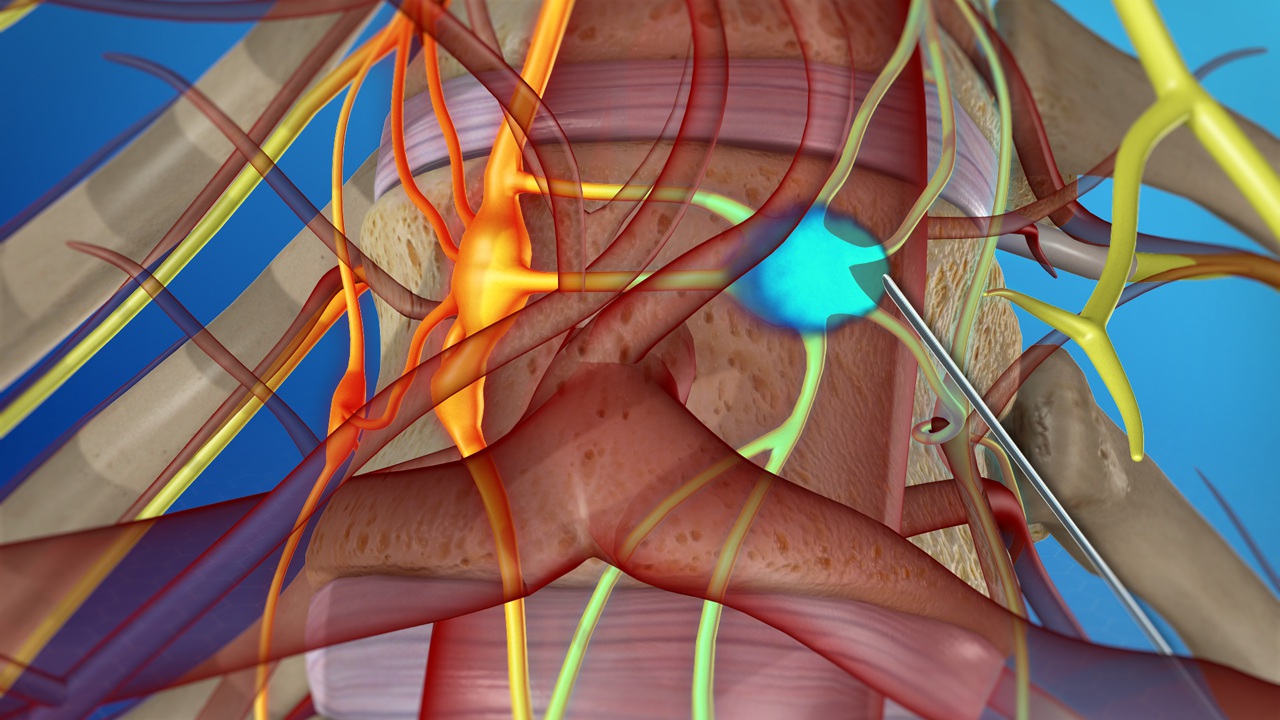
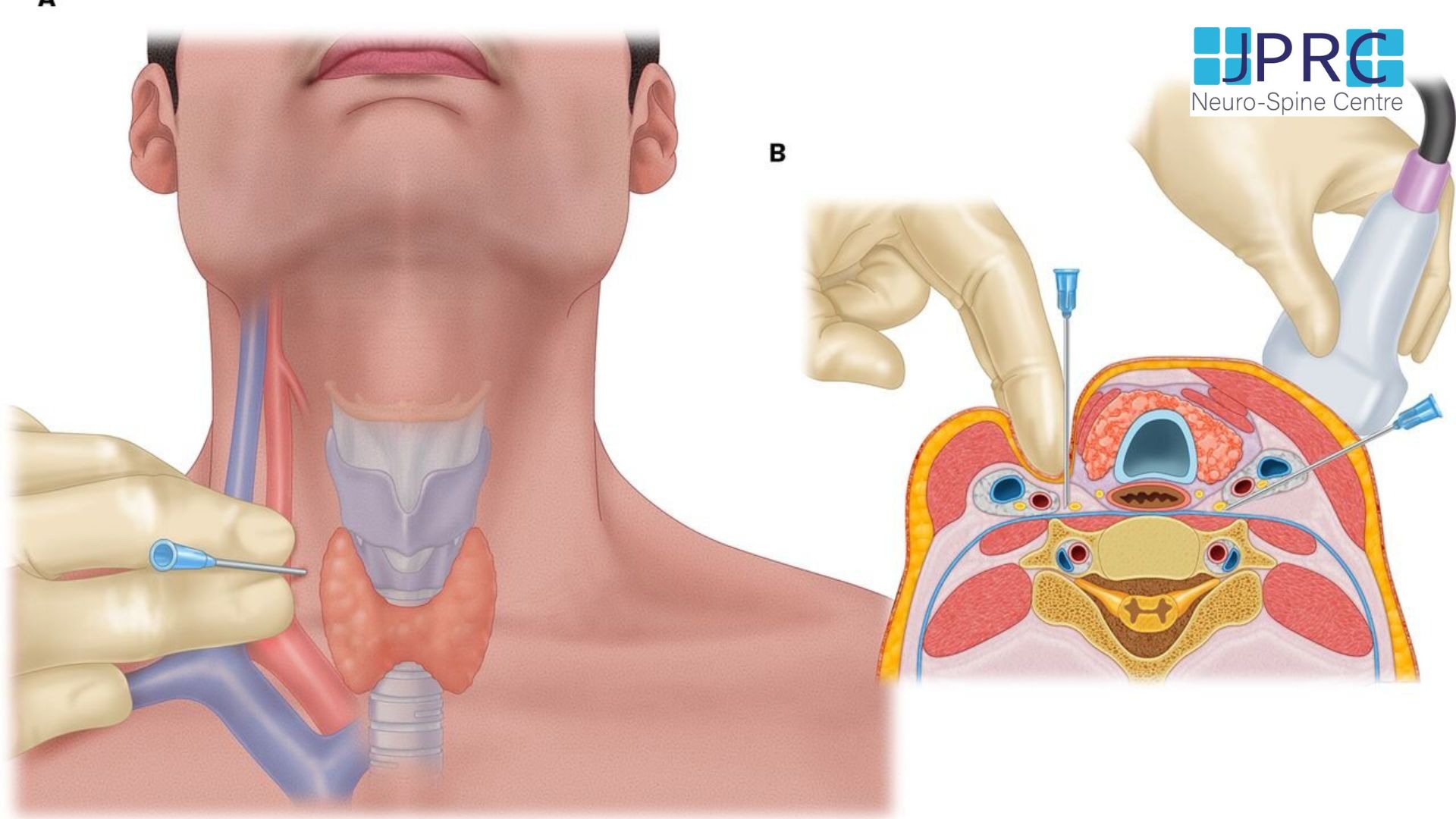
Nerve blocks
-
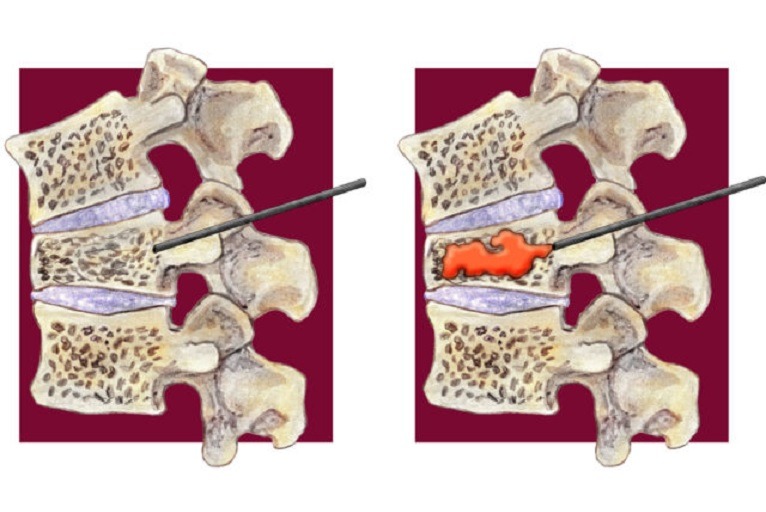
Radiofrequency ablation (RFA)
-
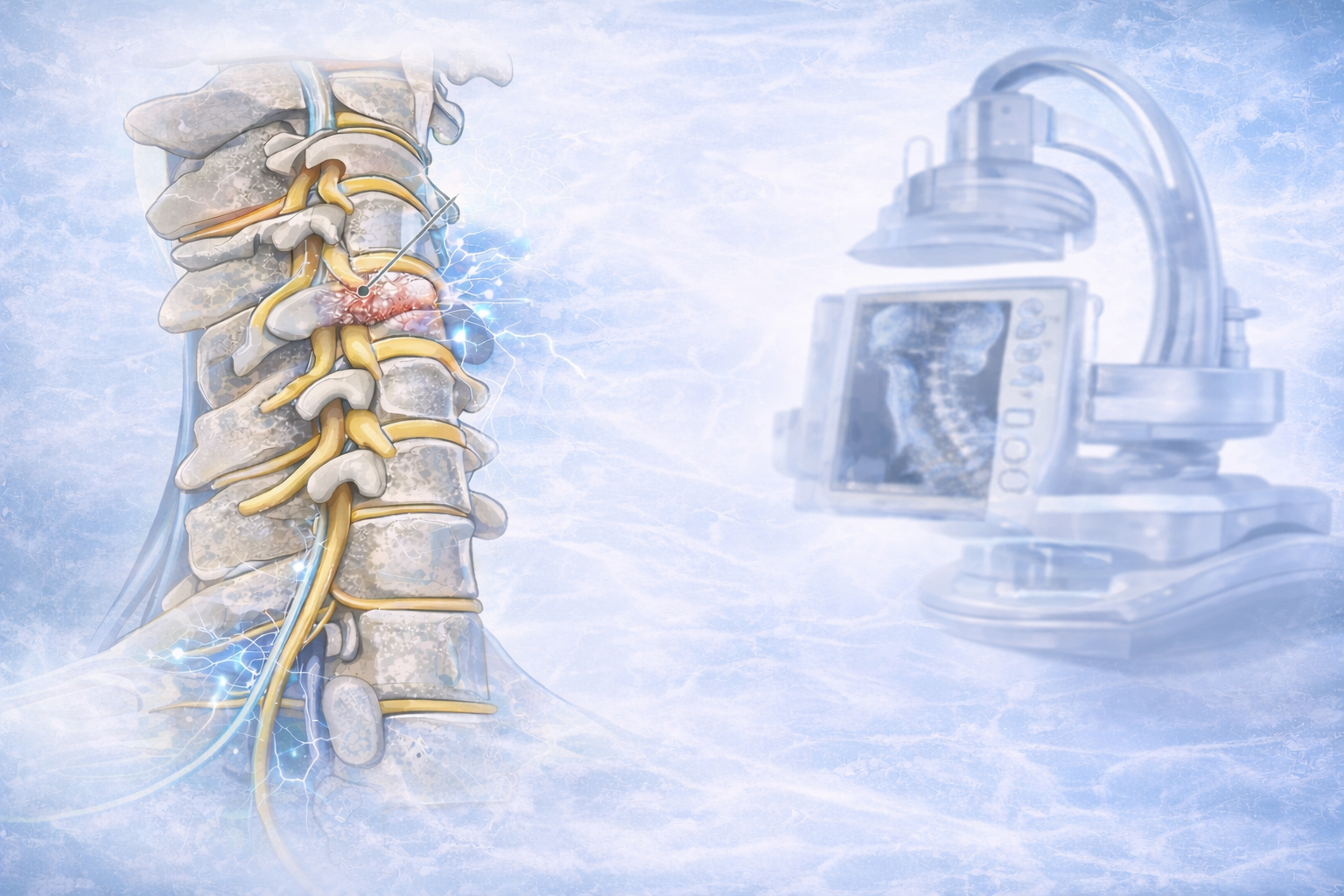
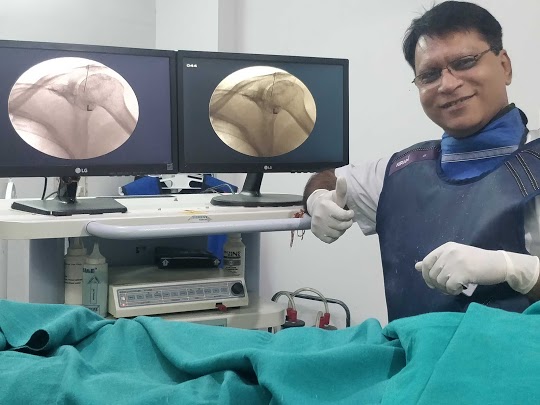
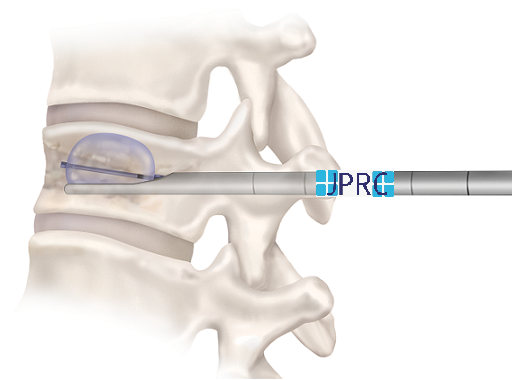
Minimally invasive techniques (e.g., Neuroplasty/MIPSI in selected cases)
These targeted treatments aim to reduce inflammation, relieve nerve compression, and promote faster recovery—often without surgery.
When Is Surgery Considered?
Surgery is usually a last option and may be recommended if:
-
There is progressive muscle weakness
-
Loss of bladder or bowel control occurs (medical emergency)
-
Severe pain persists despite comprehensive non-surgical care
Prevention Tips
-
Maintain good posture at work and while using devices
-
Lift objects using your legs, not your back
-
Strengthen core and back muscles
-
Take regular movement breaks
-
Maintain a healthy weight
Conclusion
A herniated disc is a common and often manageable condition. With early diagnosis and modern non-surgical treatments, most patients can return to normal activities without the need for surgery. Consulting a spine or interventional pain specialist can help determine the best personalized treatment plan.

























.jpg)






_Injection_Description_in_Hindi.jpg)









.jpg)






.jpg)


.jpg)
.jpg)
.jpg)





.jpg)
.jpg)
.jpg)
.jpg)
.jpg)
.jpg)
.jpg)
.jpg)
.jpg)
.jpg)
.jpg)
.jpg)
.jpg)
.jpg)
.jpg)
.jpg)
.jpg)
.jpg)
.jpg)
.jpg)
.jpg)
.jpg)




1.jpg)
1.jpg)
1.jpg)
1.jpg)
1.jpg)
1.jpg)
1.jpg)






2.jpg)
3.jpg)
4.jpg)
1.jpg)
2.jpg)
5.jpg)
6.jpg)


7.jpg)
2.jpg)

8.jpg)

9.jpg)
3.jpg)

10.jpg)

11.jpg)


12.jpg)
4.jpg)